There is a Strong Link Between the Feline Thyroid and Kidneys
discover what causes the disruption
There is a strong link between the feline thyroid and kidneys. The hormones from the thyroid give the kidneys a level of protection, ensuring they function appropriately.
Upsetting that connection has a domino effect. Diet and veterinary drugs upset that connection.
The Endocrine Glands
As with every being on the planet, your cat is a whole being, an holistic being, with all parts connected and working in perfect synergy. How could this not be so?
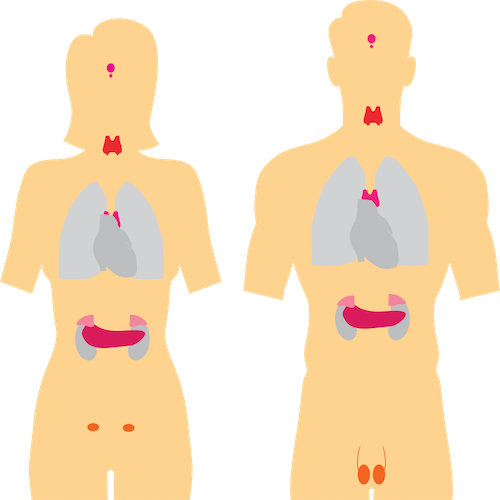
Of particular interest here is the strong connection between the endocrine glands. These descending glands - pineal, pituitary, hypothalamus, thyroid, thymus, adrenal, pancreas and ovaries/testes - are each dependent on those above it.
Each has a particular hormone which regulates a particular system in the body. The glands have both a physical function and an energetic one. For example, the adrenal glands are necessary for the function of the kidneys. They are also affected by fear, in particular, chronic fear, which can disrupt their function.
The Strong Link Between the Feline Thyroid and Kidneys
The kidneys filter blood, removing toxins and body waste. The rate at which this happens is known as the glomerular filtration rate (GFR). The thyroid hormones increase this rate naturally, allowing for well functioning kidneys.
In hyperthyroid cats, the increased thyroid hormones increase their effect on the kidneys. What this does is critical to understanding the link, because this can hide the fact that the kidneys are malfunctioning.
When veterinary drugs are used, such as with hyperthyroid cats, they act as a thyroid hormone depressor. As a consequence, the kidneys have reduced efficiency and the kidney malfunctioning is now exposed or aggravated.
The common veterinary drugs include radioactive iodine, methimazole and surgery to remove part or all of the thyroid.
This is very much like bolting the stable door after the horse has escaped.
The Cause of Thyroid Dysfunction in Cats
Although veterinary science will tell you there is no known cause of thyroid malfunction, common sense tells us otherwise.
The common food cats are fed, aka commercial cat food, is deficient in natural nutrition, is toxic and decreases the cats natural health. It sort of keeps them alive, but it doesn't keep them healthy. Over the years, the toxic load increases as the overall nutritional value decreases.
Cracks in the cats health begin to appear.
Add to this disasterous diet the annual injections that masquerade-as protective, but are in fact highly toxic, and it is surprising that cats often take years to succumb to poor health.
Sadly, veterinarians are not trained to look for causes. They are trained to add in more toxins in the form of drugs, which simply exacerbate the situation.
Repairing The Damage
This often requires a very considerable conscious change of awareness. Once people see the strong link between the feline thyroid and kidneys and the damage that occurs with the inappropriate diet and treatment, they can start to take proactive measures.
The very first thing to address is the diet, No cat can have a healthy thyroid or functioning kidneys on the horrible trash that passes as commercial cat food. They need the diet their ancestors evolved on - quality raw meat and bones.
And that is your job. Learn what to use and what to expect (see link below).
Next is to use the services of a (real) homeopath or homeopathic vet. While the diet can go a long way to restoring the body functioning as normal, the use of drugs and the long term consequences may carry a toll that needs a skilled approach to unravel.
Be very assured that both hyperthyroid cats and hypothyroid cats, showing respectively over-function and under-function of the thyroid, react favourably to a clean diet and skilled homeopathic treatment.